HVAC SEO Guide 2026: How to Dominate Local Search and Get More Calls

For HVAC contractors, summer heatwaves and winter freezes mean one thing: emergency calls. But when a homeowner's AC breaks down in July, who do they call? They pull out their phone and search "AC repair near me." If your HVAC company isn't showing up at the top of Google Maps and AI search results, you are losing thousands of dollars in revenue to your competitors.
This comprehensive guide will break down exactly how HVAC companies can dominate local search results, optimize for the future of AI search, and build a predictable pipeline of high-quality, exclusive leads.
What is HVAC SEO and why is it critical in 2026?
HVAC Search Engine Optimization (SEO) is the process of improving your website and online presence so that your business appears at the top of search engine results for relevant local queries like "HVAC repair [City]" or "furnace installation near me."
In 2026, standard SEO is no longer enough. The landscape has shifted toward Answer Engine Optimization (AEO). When homeowners ask ChatGPT or Google AI Overviews, "Who is the best HVAC contractor in my area?", these systems look for businesses with the strongest "entity authority." This means your business needs a consistent presence across hundreds of platforms, directories, and news sites, not just a well-designed website.
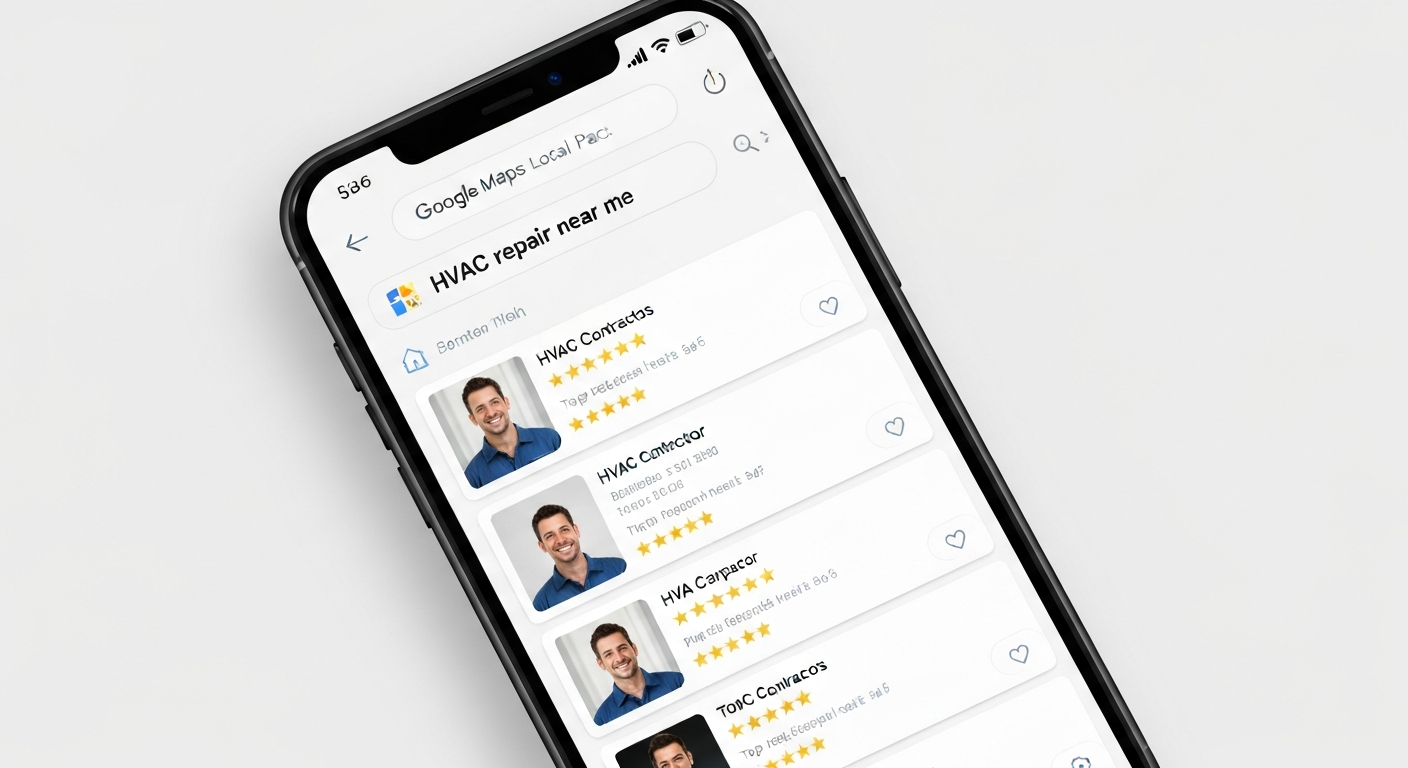
How do I get my HVAC company to the top of Google Maps?
Ranking in the Google "Local Pack" (the top three map results) is the holy grail of HVAC marketing. It drives the highest volume of high-intent, ready-to-buy phone calls.
To rank higher on Google Maps, you must focus on three core pillars:
- Proximity: How close is the searcher to your physical address? (You can't control this, but you can control the next two).
- Relevance: Does your Google Business Profile (GBP) clearly state that you offer the exact service the user is searching for? You need fully optimized service categories, detailed service descriptions, and regular posts.
- Prominence: How trusted is your business? This is determined by the quantity and quality of your Google reviews, as well as citations (mentions of your business) across the web.
Building E-E-A-T for HVAC (Experience, Expertise, Authoritativeness, Trustworthiness)
Search engines and AI systems prioritize content from established, credible businesses. To build E-E-A-T, your online presence must showcase first-hand experience and authority.
You can differentiate your HVAC company by emphasizing these trust signals:
- Technician Bios: Highlight the experience and training of your team.
- Real Project Photos: Show your team on the job instead of using stock images.
- Before-and-After Installs: Visually demonstrate the quality of your work.
- Customer Testimonials: Feature detailed reviews from satisfied homeowners.
- Manufacturer Certifications: Display badges for brands you are certified to install (e.g., Carrier, Trane, Lennox).
- Local Case Studies: Write about specific challenges you solved for homeowners in your service area.
These are signals that help establish credibility for both users and search systems, proving that your business is a legitimate, highly skilled local provider.
Why is my HVAC website not generating leads?
Many HVAC companies spend thousands on a beautiful website, only to hear crickets. If your website isn't generating leads, it's usually due to one of three issues:
1. Lack of Local Relevancy: Your website talks about "HVAC services" but doesn't clearly indicate where you provide them. You need dedicated service area pages for every city and county you operate in.
2. Poor Technical SEO: If your website loads slowly, isn't mobile-friendly, or lacks proper schema markup (code that helps search engines understand your business), Google will penalize your rankings. Website modernization is crucial for fixing these technical bottlenecks.
3. Weak Conversion Optimization: Getting traffic is only half the battle. If visitors land on your site and can't immediately find your phone number or an easy way to book an appointment, they will bounce to a competitor. You need clear calls-to-action and, ideally, an AI Chat Widget to capture leads 24/7.
What are the most important keywords for HVAC companies?
A comprehensive HVAC SEO strategy targets multiple search intents to ensure a steady flow of both immediate jobs and long-term projects. The most critical keyword categories include:
- Emergency Intent: "AC repair near me," "emergency furnace repair [City]," "AC not blowing cold air." These are high-intent keywords that require immediate attention.
- Installation & Replacement: "HVAC installation [City]," "new AC unit cost," "furnace replacement contractors." These are high-ticket keywords where customers research before making a big investment.
- Maintenance & Tune-ups: "AC tune-up," "HVAC maintenance plan," "duct cleaning services." These are great for building a recurring revenue pipeline.
- Commercial HVAC: "commercial HVAC contractors [City]," "rooftop unit repair," "industrial AC installation."
- Heat Pumps & Mini Splits: "ductless mini split installation," "heat pump repair near me," "mini split maintenance."
- Indoor Air Quality: "whole house humidifier installation," "UV light air purifier," "indoor air quality testing."
- Financing Searches: "HVAC financing with bad credit," "AC replacement payment plans."
- Seasonal Searches: "winterize AC unit," "furnace prep for winter."
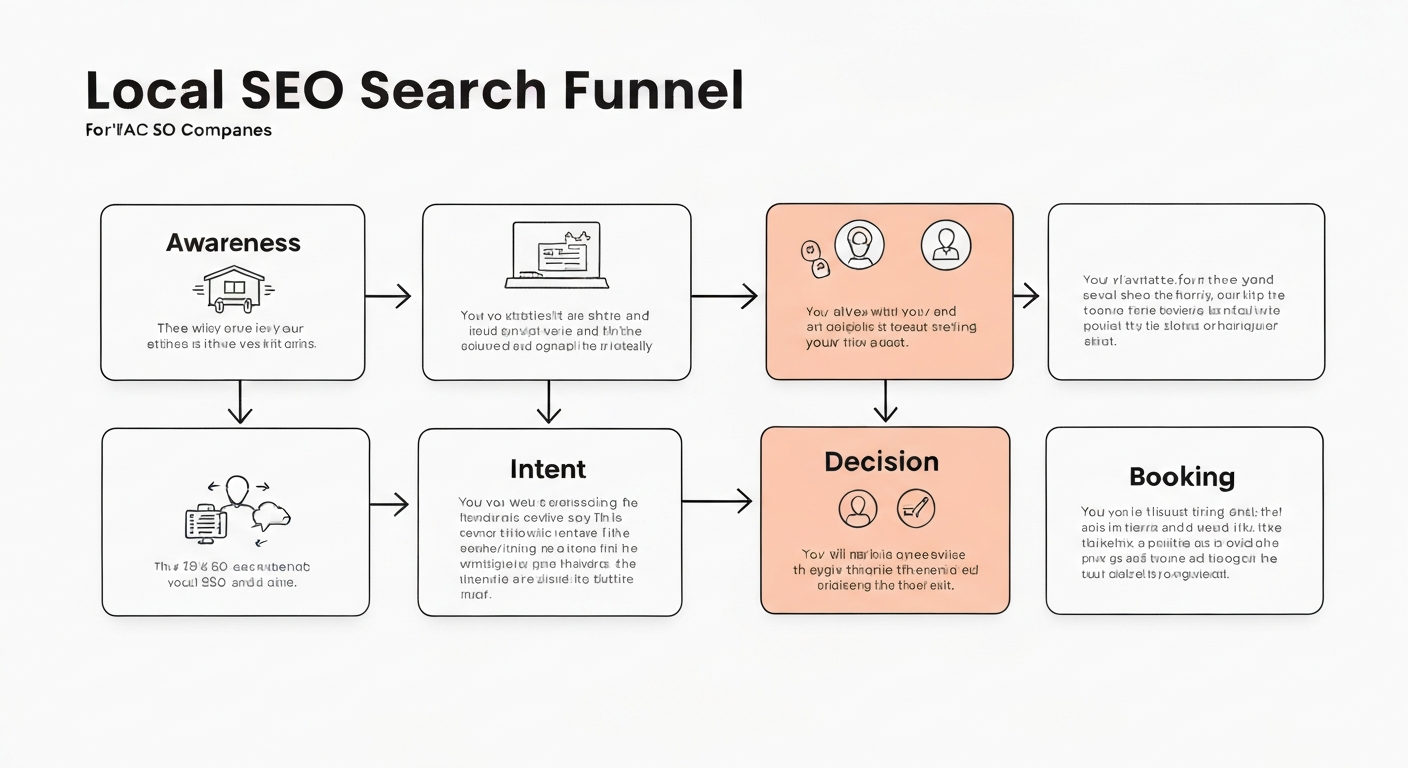
How does Answer Engine Optimization (AEO) affect HVAC marketing?
AEO is the process of optimizing your brand to be recommended by AI systems like ChatGPT, Perplexity, and Google's AI Overviews. Unlike traditional Google search, which gives users a list of links, AI engines give users a direct answer.
If a homeowner asks an AI, "Who is the most reliable AC repair company in my town?", the AI doesn't just look at who has the best website. It looks at the broader ecosystem. AI systems draw on many signals—including structured business information, authoritative content, reviews, and consistent mentions across trusted sources—to better understand which businesses are well established. This is why our MultiCasting™ system is so effective—it distributes your content across 300+ platforms, building massive "entity authority" that AI engines trust.
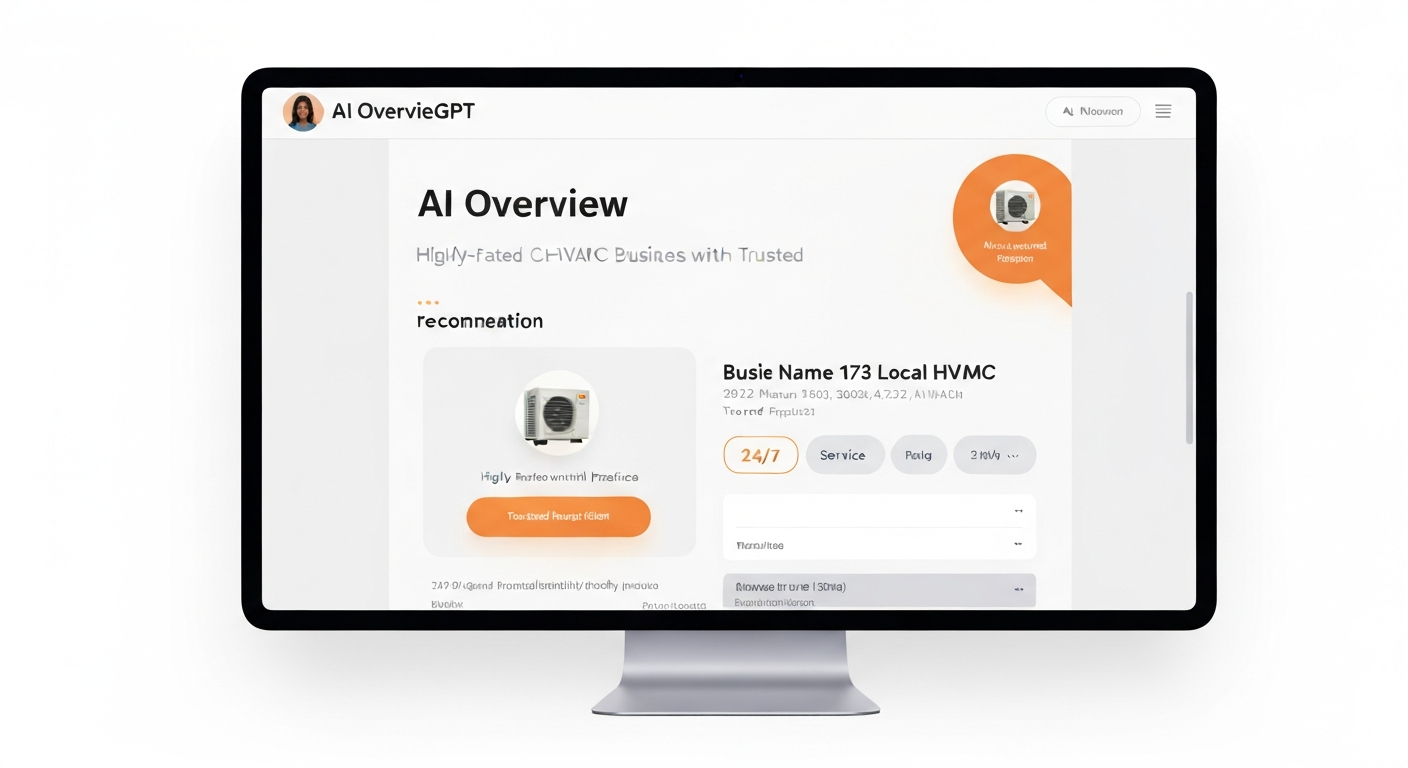
What this would look like for an HVAC company
Imagine an HVAC contractor serving Murfreesboro, Smyrna, and Lebanon. Instead of relying on one homepage, they create dedicated city pages, optimize their Google Business Profile, publish educational content about AC repair and furnace replacement, and distribute that content through MultiCasting™. The goal is to build authority across multiple platforms so both Google and AI systems recognize the business as a trusted local provider.
How do service area pages help HVAC contractors get more jobs?
If your HVAC company is based in City A, but you also serve City B, City C, and City D, you cannot rely solely on your homepage to rank in those neighboring cities. Google favors businesses that are physically located in the searcher's city.
To overcome this, you must build highly optimized Service Area Pages for every city you target. These pages should include localized content, photos of your team working in that specific area, and reviews from customers in that city. This proves to Google—and to potential customers—that you are a trusted local provider, even if your office is a few miles away.
How do I get more reviews, and do they actually impact SEO?
Yes, reviews are one of the most heavily weighted ranking factors for Google Maps. But it's not just about the total number of reviews; it's about the velocity (how consistently you get them), the rating, and the keywords used in the review text.
The best way to get more reviews is to automate the process. Using a Reputation Management system, you can automatically send a text message or email to your customer the moment a job is marked complete in your CRM, asking them for feedback while the positive experience is still fresh in their mind.
Should I stop running Google Ads once my SEO improves?
Not necessarily. The most dominant HVAC companies use a combination of both. Google Ads (specifically Local Services Ads) guarantee you visibility at the very top of the page for high-intent searches, which is crucial during peak summer and winter seasons.
However, SEO and AEO provide a much higher return on investment over the long term. Once you rank organically, you aren't paying a toll for every single click. The ideal strategy is to use Ads to generate immediate revenue while investing heavily in SEO/AEO to build a sustainable, permanent lead generation engine that eventually reduces your reliance on paid traffic.
Ready to Dominate Your Local HVAC Market?
The HVAC industry is highly competitive, but the companies that adapt to the new realities of AI search and omnipresent content distribution will win the lion's share of the market. If you are ready to stop buying shared leads and start building your own exclusive lead pipeline, get your AI Recommendation Score™ today.
Frequently Asked Questions
How can an HVAC company rank higher on Google Maps?
To rank higher on Google Maps, an HVAC company must fully optimize their Google Business Profile, consistently generate positive local reviews, build local citations across directories, and ensure their website has strong local relevance and technical SEO.
What is Local SEO for HVAC companies?
Local SEO for HVAC companies is the practice of optimizing your online presence to attract more business from relevant local searches on Google and other search engines, specifically focusing on the geographic areas you serve.
How do I get more HVAC leads without buying from Angi or HomeAdvisor?
By investing in your own organic visibility through Local SEO, Answer Engine Optimization (AEO), and a high-converting website, you can generate your own exclusive leads rather than paying for shared leads that are sold to multiple competitors.
Why are Google reviews important for HVAC SEO?
Google reviews act as a major trust signal for both search engines and potential customers. A high volume of positive, keyword-rich reviews significantly boosts your prominence, which is a key ranking factor for the Google Local Pack.
What are service area pages and why do HVAC contractors need them?
Service area pages are dedicated pages on your website targeting specific cities or neighborhoods you serve. They help Google understand your service radius and allow you to rank for local searches outside of the city where your main office is located.
How does AI search impact HVAC marketing?
AI search engines like ChatGPT and Perplexity provide direct answers to users asking for HVAC recommendations. To be recommended by AI, your business needs strong 'entity authority' built through consistent mentions across authoritative news sites, blogs, and directories.
How long does SEO take for an HVAC company?
Traditional SEO typically takes 3 to 6 months to see significant improvements in rankings and traffic. However, leveraging strategies like MultiCasting to build AI visibility can sometimes yield faster trust signals and citations.
What are the biggest SEO mistakes HVAC companies make?
Common mistakes include having a slow, non-mobile-friendly website, neglecting their Google Business Profile, failing to create localized content for different service areas, and relying solely on paid ads without building long-term organic authority.

John Simpson, Co-owner
John Simpson is the Co-owner of Media Surge Marketing and creator of the SURGE Framework™, a proprietary methodology that helps local service businesses become the companies Google and AI recommend.
Specializing in AI visibility, local SEO, Answer Engine Optimization (AEO), and content strategy, John combines real-world client experience with ongoing research to help businesses build trust and improve their online visibility.
Ready to Implement
These Strategies?
Stop losing leads to competitors who are already optimizing for AI Search. Let's build your custom authority roadmap.
More Insights
View All
How Do Homeowners Find Roofing Companies in 2026?
Discover the exact steps homeowners take to find, research, and hire roofing contractors today. Learn how Google Maps, AI search tools, and reviews shape their decisions.

Local SEO for Roofers: How to Rank Higher and Get More Calls
Learn the exact local SEO strategies roofing companies use to dominate Google Maps, outrank competitors, and generate exclusive, high-intent leads.

How to Rank in the Google Local Pack: A Step-by-Step Guide for Contractors
The Google Local Pack is the #1 source of free, exclusive, high-intent leads for local service businesses. Here is exactly how to get there and stay there.