How Do Homeowners Find Roofing Companies in 2026?

If you own a roofing company, you already know that the way people find contractors has changed. The days of opening a phone book or trusting a door-to-door salesman are mostly over. Today, a homeowner with a leaking roof or storm damage turns to their phone or computer. They have more choices and more information than ever before.
But exactly how do they search? What makes them click on one roofing company instead of another? And most importantly, how can you make sure your company is the one they choose?
In 2026, the journey a homeowner takes to find a roofer is complex. It involves traditional Google searches, Google Maps, online reviews, social media, and increasingly, AI search tools like ChatGPT and Perplexity. To get more roofing leads, you need to understand this journey from start to finish.
This guide will break down exactly how homeowners find roofing companies today. We will look at the tools they use, the trust signals they look for, and the steps you need to take to put your business right in front of them.
The Shift in Homeowner Behavior
Before we look at the specific tools homeowners use, we need to understand their mindset. Buying a new roof is a massive investment. Most homeowners will spend between $10,000 and $25,000. For an investment this large, people do not make quick decisions unless it is an absolute emergency.
They want to feel safe. They want to know they are not getting scammed. They want to hire a company that is reliable, professional, and does high-quality work. Because of this, they do a lot of research. Most consumers read online reviews before choosing a local business, so your review profile directly shapes whether they trust you enough to call.
When a homeowner realizes they need a roofer, they usually fall into one of two categories:
- The Emergency Searcher: This person just had a tree fall on their house, or water is pouring through their ceiling. They need help right now. They will likely search on their phone, look at the top three results on Google Maps, check the star ratings, and call the first company that answers the phone.
- The Planner: This person knows their roof is getting old. Maybe they are planning to sell their house soon. They have time to research. They will read articles, ask friends for recommendations, read dozens of reviews, and get multiple quotes before making a decision.
Your roofing marketing strategy needs to capture both types of homeowners. Let's look at the specific ways they find you.
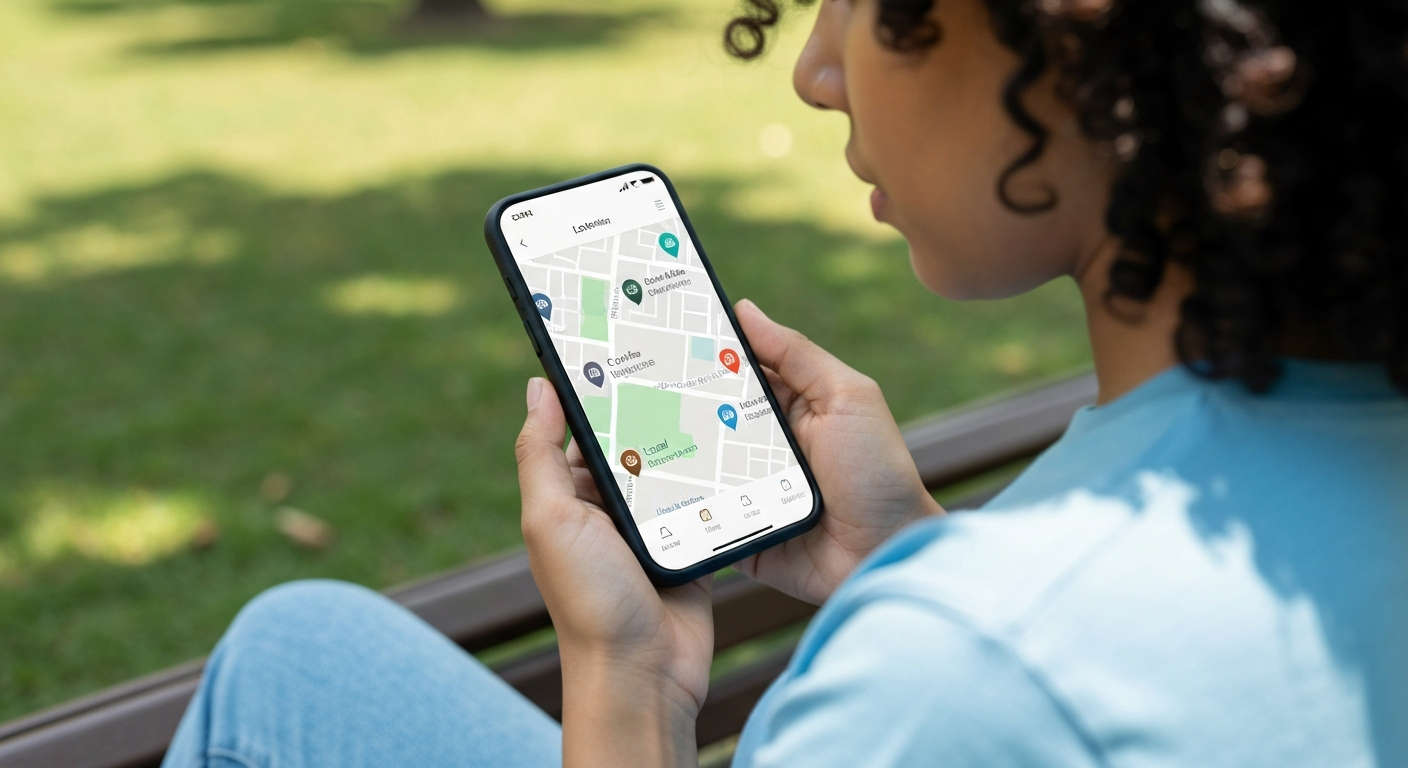
1. Google Search: The Starting Point for Most
Despite all the new technology out there, a simple Google search is still the starting point for most homeowners. When they notice a problem, they grab their phone and type in a question or a phrase.
They might search for something broad, like "roofing companies near me" or "best roofers in [City]." Or, they might search for a specific problem, like "how to fix a leaking roof" or "does insurance cover hail damage."
How to Be Found in Google Search
To show up in these searches, your website needs to be optimized. This is called Search Engine Optimization (SEO). It means your website is built in a way that Google understands and trusts.
If you want to show up for "roofing companies near me," your website must clearly state where you are located and what areas you serve. You need service area pages for every city or town you want to work in. If you only talk about your main city, Google will not show your website to people searching from the next town over.
You also need to make sure your website loads fast and works perfectly on mobile phones. Most local searches happen on a mobile device. If your website is slow or hard to read on a phone, the homeowner will hit the back button and call your competitor.
2. Google Maps: The Most Important Real Estate
When someone searches for a local service like roofing, Google almost always shows a map at the top of the page. Under the map, there are usually three businesses listed. This is called the "Local Pack" or the "Map Pack."
For a roofing company, the Local Pack is the most important real estate on the internet. Why? Because it is the first thing the homeowner sees, and it gives them all the information they need right away: your company name, your star rating, your number of reviews, and a button to call you.
If a homeowner is doing an emergency search because their roof is leaking, they are probably going to call one of the three companies in the Local Pack. They are not going to scroll down and read ten different websites.
How to Win in Google Maps
To get into the top three spots on Google Maps, you need a fully optimized Google Business Profile (GBP). This is a free listing from Google, but you have to manage it properly.
- Claim and Verify Your Profile: Make sure you actually own your listing and that all the information is correct.
- Use the Right Categories: Your primary category should be "Roofing Contractor."
- Add Photos Regularly: Google loves businesses that are active. Upload photos of your team, your trucks, and your completed jobs every single week.
- Get Consistent Reviews: We will talk more about reviews in a moment, but getting a steady stream of new, positive reviews is crucial for ranking in the Map Pack.
- Keep Information Accurate: Your business name, address, and phone number must be exactly the same on your Google profile as they are on your website and everywhere else on the internet.
3. Online Reviews: The Ultimate Trust Signal
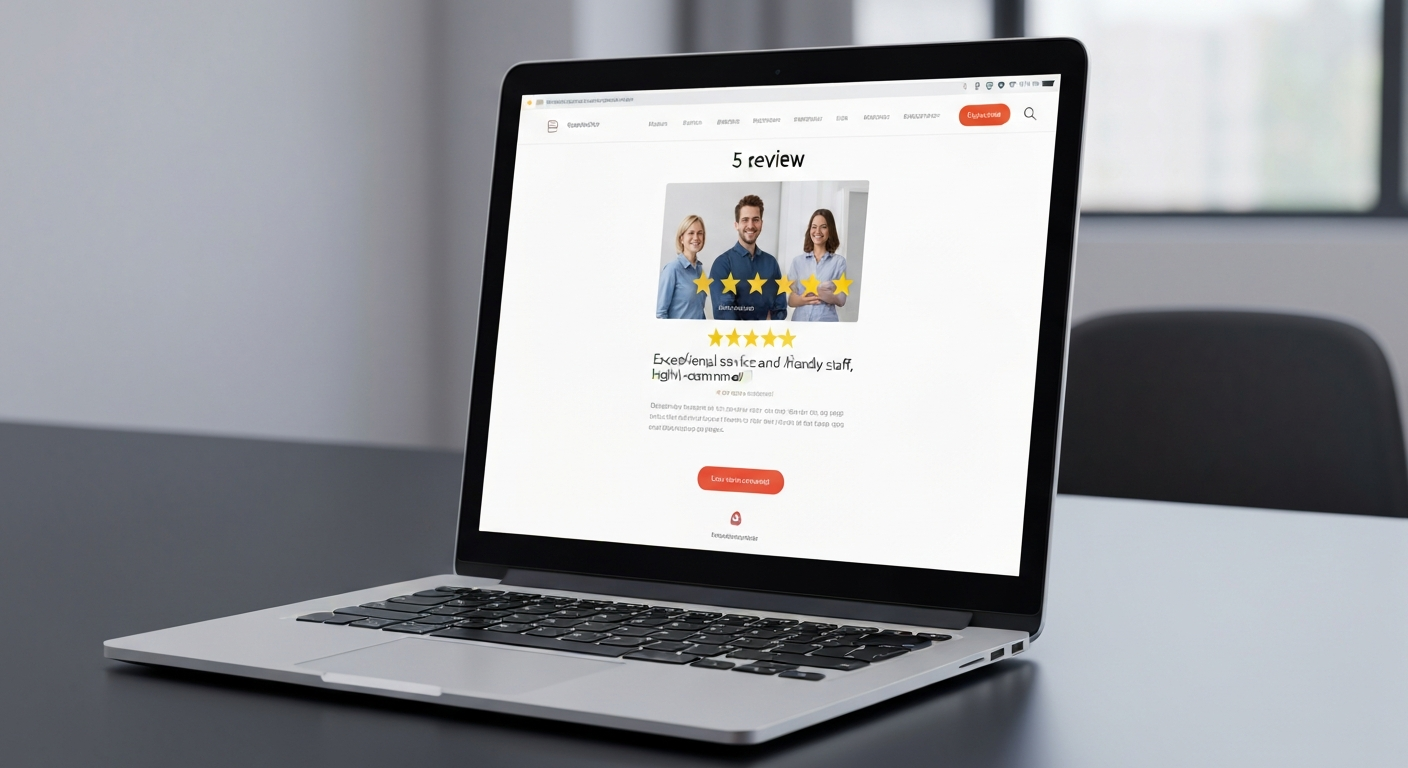
It is impossible to overstate how important online reviews are in 2026. A homeowner might find you on Google Maps, but your reviews will determine whether they actually call you.
Think about it: would you hire a contractor with a 3.2-star rating and only 5 reviews, or a contractor with a 4.8-star rating and 150 reviews? The choice is obvious.
Homeowners read reviews to look for red flags. They want to know if you show up on time, if you clean up the nails from their yard, and if you stick to your original estimate. They are looking for proof that you are trustworthy.
How to Manage Your Reviews
You cannot just hope that happy customers will leave a review. You need a system to make it happen.
- Ask at the Right Time: The best time to ask for a review is right after the job is finished, when the customer is happiest.
- Make It Easy: Send them a text message or an email with a direct link to your Google review page. Do not make them search for it.
- Respond to Every Review: When someone leaves a review, reply to it. Thank them for their business. If someone leaves a bad review, reply politely and try to fix the problem. This shows future customers that you care about your reputation and that you stand behind your work.
4. Referrals and Word of Mouth
Even in the digital age, word of mouth is incredibly powerful. Homeowners still ask their neighbors, friends, and family members for recommendations.
However, the way word of mouth works has changed. In the past, if a neighbor recommended a roofer, the homeowner would just call them. Today, if a neighbor recommends a roofer, the homeowner will still go online to research them.
They will search for the company name on Google. They will look at the website. They will read the reviews. If the online presence does not match the glowing recommendation from their neighbor, they might still choose someone else.
This means your online marketing and your real-world reputation have to work together. A great online presence makes it easier for people to refer you, and it helps close the deal when a referral happens.
5. AI Search Tools: The New Frontier
This is the biggest change in how people search in 2026. Homeowners are increasingly using artificial intelligence (AI) tools like ChatGPT, Perplexity, Gemini, and Google AI Overviews to find information.
Instead of typing a few keywords into Google, they are having conversations with AI. They might type: "My roof is 20 years old and has a few missing shingles. What should I do, and who are the most reliable roofing contractors in [My City]?"
The AI tool will read the question, analyze information from all over the internet, and give the homeowner a direct answer. It will often list two or three specific roofing companies and explain why they are recommended.
How to Be Recommended by AI
Getting recommended by AI is different from ranking on regular Google. You cannot just stuff keywords onto your website. You need to build something called "Entity Authority."
AI tools look at the entire internet to figure out who is the best. They look at your website, your reviews, news articles about your company, your social media profiles, and directories where your business is listed. If your company is mentioned in a lot of trusted places, the AI learns that you are a reliable expert.
This is called Answer Engine Optimization (AEO). To win in AI search, you need to publish helpful content and make sure your business is talked about on many different platforms, not just your own website.
6. Social Proof and Social Media
While most homeowners do not go to Facebook or Instagram to search for a roofer, social media still plays a big role in their decision. They use social media for "social proof."
When a homeowner is researching your company, they might check your Facebook page. They want to see if you are a real, active business. They want to see photos of your recent jobs. They want to see pictures of your crew. If your last post was from three years ago, they might wonder if you are still in business.
Also, local community groups on Facebook are huge for referrals. People constantly post things like, "Does anyone know a good roofer who won't rip me off?" Being active in your community and having a good reputation means people will tag your business in these groups.
7. Educational Content: Building Trust Before the Sale
As we mentioned earlier, the "Planner" homeowner does a lot of research before buying a roof. They have questions about materials, costs, warranties, and insurance.
If your website answers these questions, you build trust with the homeowner before they ever speak to you. This is called content marketing.
Imagine a homeowner is trying to decide between architectural shingles and metal roofing. They search Google for "architectural shingles vs metal roof cost in [State]." If they find an article on your website that clearly explains the pros and cons, the costs, and what works best in your local climate, they will see you as an expert.
When they are finally ready to get a quote, who do you think they will call? The company that gave them helpful, honest information, or the company with a basic website that just says "Call us for a free estimate"?
Content Ideas for Roofers
To attract these researching homeowners, you should publish articles and videos on topics like:
- How to know if you need a roof repair or a full replacement
- The average cost of a roof replacement in your city
- How to navigate the roofing insurance claim process
- The best roofing materials for your local weather
- Red flags to look out for when hiring a roofing contractor
This educational content not only helps homeowners, but it also gives Google and AI tools more reasons to trust your website and show it in search results.
8. The Impact of Mobile Search
We touched on this earlier, but mobile search deserves its own section. Today, the vast majority of local searches happen on a smartphone. This changes how homeowners interact with your business online.
When someone searches for a roofer on their phone, they want immediate answers. They don't want to pinch and zoom to read tiny text on a website that was built for a desktop computer. They want a big, clear "Call Now" button.
If a homeowner lands on your website from their phone and it takes more than three seconds to load, they will leave. If they can't easily find your phone number or a contact form, they will leave. Your website must be designed with a "mobile-first" approach. This means it is built specifically to look and work perfectly on a small screen.
Furthermore, Google uses "mobile-first indexing." This means Google looks at the mobile version of your website to decide how to rank it. If your mobile site is poor, your rankings will suffer, even if your desktop site looks great.
9. How to Stand Out from the Competition
In almost every city, there are dozens, if not hundreds, of roofing companies competing for the same jobs. So, how do you stand out when a homeowner is looking at a list of options?
The answer is differentiation. You need to clearly communicate why you are better than the rest.
- Highlight Your Guarantees: Do you offer a lifetime warranty on labor? Do you guarantee to leave the yard spotless? Put these guarantees front and center on your website and Google Business Profile.
- Showcase Your Certifications: Are you a GAF Master Elite contractor or an Owens Corning Platinum Preferred contractor? These badges carry weight. They prove to the homeowner that the manufacturer trusts you.
- Use Real Photos, Not Stock Images: Homeowners can spot a stock photo of a pristine, fake house from a mile away. Use real, high-quality photos of your actual crew working on actual houses in your city. This builds authenticity.
- Offer Financing: A new roof is expensive. By clearly advertising that you offer financing options, you can attract homeowners who might otherwise delay the project or choose a cheaper, lower-quality contractor.
10. The Role of Video Content
Video is becoming one of the most powerful tools in roofing marketing. Homeowners love video because it is easy to consume and builds trust faster than text alone.
When a homeowner is researching companies, a video of the owner explaining their process, introducing the team, or showing a completed project can make a massive difference. It humanizes your company. It shows the homeowner exactly who will be showing up at their house.
You don't need a Hollywood budget to create good video content. Simple, honest videos shot on a smartphone can be incredibly effective. Consider creating videos that answer common questions, show before-and-after transformations, or explain how you handle the insurance claim process.
These videos can be posted on your website, your Google Business Profile, YouTube, and social media. They also provide great signals to AI search tools that you are an active, authoritative business.
11. Tracking and Measuring Success
Understanding how homeowners find you is only half the battle. The other half is knowing which of your marketing efforts are actually working. You need to track your results.
If you don't track where your leads are coming from, you are just guessing. You might be spending thousands of dollars on a marketing channel that isn't producing any results, while ignoring a channel that could be highly profitable.
Here are a few ways to track how homeowners are finding you:
- Call Tracking Numbers: Use different phone numbers for your website, your Google Business Profile, and your ads. This tells you exactly which platform generated the call.
- Website Analytics: Use tools like Google Analytics to see how many people are visiting your website, which pages they are looking at, and whether they are coming from Google Search, social media, or somewhere else.
- Ask Every Caller: Train your staff to ask every single caller, "How did you hear about us?" Keep a record of their answers. This simple step can provide incredibly valuable insights.
By tracking your results, you can see exactly how homeowners in your specific area are finding you, and you can adjust your marketing strategy to focus on the channels that work best.
Putting It All Together: The MultiCasting Approach
As you can see, homeowners do not just use one method to find a roofer. They use a combination of search engines, maps, reviews, AI tools, and social proof. To truly dominate your local market and get a steady stream of high-quality roofing leads, you need to be visible in all of these places.
You cannot just rely on a website. You cannot just rely on Google Maps. You need a comprehensive strategy that covers everything.
At Media Surge Marketing, we use a system called MultiCasting. Instead of just writing a blog post for your website, we take your expertise and turn it into articles, videos, podcasts, and social media posts. We then distribute this content across hundreds of different platforms.
This massive digital footprint does three things:
- It helps your website rank higher in traditional Google searches.
- It pushes your Google Business Profile to the top of the Map Pack.
- It trains AI tools like ChatGPT to recognize your roofing company as the top expert in your city.
By being everywhere the homeowner is looking, you stop being just another option and become the obvious choice.
Conclusion
The way homeowners find roofing companies has evolved, but the core principles remain the same. They want to find a company they can trust, and they use digital tools to verify that trust.
To succeed in 2026, your roofing marketing strategy must be built on visibility and authority. You need a strong presence on Google Maps, a flawless review profile, a professional website, and a content strategy that answers homeowners' questions. By understanding how your customers search and putting your business directly in their path, you can generate more exclusive leads, close more sales, and grow your roofing company sustainably.
Frequently Asked Questions
Do people still use the Yellow Pages to find roofers?
No. The vast majority of homeowners use the internet to find local service businesses. Even older generations now use Google, smartphones, and online reviews to find and research contractors. Spending money on print directories is generally not a good investment for roofing companies today.
Should I pay for leads from sites like Angi or HomeAdvisor?
While buying leads can provide a quick burst of activity, it is not a good long-term strategy. These platforms sell the exact same lead to multiple roofers, forcing you into a price war. Furthermore, you are spending money to build their brand, not yours. It is much more profitable to invest in your own local SEO and online visibility so you can generate exclusive leads.
How important is my website if I already have a Google Business Profile?
Your website is extremely important. While your Google Business Profile helps you show up in the Map Pack, your website is where you prove your expertise. Homeowners will click from your profile to your website to learn more about your services, read your educational content, and see examples of your past work. A strong website also helps your Google Business Profile rank higher.
What is the fastest way to get roofing leads online?
The fastest way to get immediate leads is through paid advertising, like Google Local Services Ads or Google Search Ads. However, the moment you stop paying, the leads stop. The best long-term strategy is to build your organic visibility through SEO and AEO. This takes a few months to gain momentum, but it provides a steady, reliable stream of leads without paying for every click.
How do I get AI tools like ChatGPT to recommend my roofing company?
AI tools recommend businesses that have strong 'Entity Authority.' This means your business needs to be mentioned consistently across the internet on trusted websites, news articles, directories, and social platforms. You also need to publish high-quality, educational content that answers common roofing questions. This trains the AI to see you as the local expert.
John Simpson, Co-owner
John Simpson is the Co-owner of Media Surge Marketing and creator of the SURGE Framework™, a proprietary methodology that helps local service businesses become the companies Google and AI recommend.
Specializing in AI visibility, local SEO, Answer Engine Optimization (AEO), and content strategy, John combines real-world client experience with ongoing research to help businesses build trust and improve their online visibility.
Ready to Implement
These Strategies?
Stop losing leads to competitors who are already optimizing for AI Search. Let's build your custom authority roadmap.
More Insights
View All
Local SEO for Roofers: How to Rank Higher and Get More Calls
Learn the exact local SEO strategies roofing companies use to dominate Google Maps, outrank competitors, and generate exclusive, high-intent leads.

How to Rank in the Google Local Pack: A Step-by-Step Guide for Contractors
The Google Local Pack is the #1 source of free, exclusive, high-intent leads for local service businesses. Here is exactly how to get there and stay there.

How to Get More Local Service Leads Without Buying Shared Leads
Stop competing on price with shared leads. Learn how to generate your own exclusive, high-intent leads through SEO, AEO, and digital authority.