The Death of Traditional SEO Agencies: Why AI Search Changes Everything

Key Takeaways
- The End of the Old Playbook: Traditional SEO—relying solely on keywords and artificial backlinks—is rapidly losing effectiveness as AI search engines prioritize entity trust.
- From Links to Answers: Consumers are no longer scrolling through pages of blue links; they are asking AI assistants for direct, factual recommendations.
- The Rise of AEO: Answer Engine Optimization (AEO) is replacing traditional SEO as the primary way local businesses get discovered online.
- Entity Authority is Everything: AI models don't rank webpages; they recommend trusted business entities based on data certainty and widespread consensus.
- Visibility Marketing is the Future: To survive, agencies and businesses must shift to a holistic, omnipresent marketing strategy rather than focusing on a single website.
Quick Answer
Traditional SEO agencies are struggling because the fundamental way consumers search for local businesses has changed. Instead of typing keywords into a search engine and clicking through websites, users are asking AI tools like ChatGPT, Gemini, and Google AI Overviews for direct recommendations. Traditional SEO relies on keyword density and backlinks to rank webpages, but AI models evaluate a business's "entity authority"—looking for data certainty, positive sentiment, and consensus across the entire internet. To succeed in 2026, businesses must transition from outdated SEO tactics to comprehensive Visibility Marketing.
Table of Contents
- The Wake-Up Call: Why the Phone Stopped Ringing
- The Keyword Trap: Why Words on a Page Aren't Enough
- The Backlink Myth: Quality Over Artificial Quantity
- The Rise of Answer Engines (AEO)
- Entity Authority: The New Standard of Trust
- Why Visibility Marketing is the Only Way Forward
- Common Mistakes to Avoid
- Professional Tips for the AI Era
- Action Checklist
- Frequently Asked Questions
- Conclusion
The Wake-Up Call: Why the Phone Stopped Ringing
For two decades, the relationship between a local business and an SEO agency was incredibly predictable. You paid them a monthly retainer, they performed unseen technical adjustments on your website, and once a month, they sent you an automated report showing that your keyword rankings were moving up. You didn't necessarily understand the metrics, but as long as the phone rang, the strategy was considered a success.
However, in 2026, that relationship is falling apart. The phone has stopped ringing for thousands of local businesses that are still technically "ranking" on page one of traditional search results. Why is this happening? Because consumer behavior has fundamentally shifted. Customers are no longer clicking through ten different links to research a plumber or roofer. They are asking AI assistants for direct, definitive answers.
When an agency continues to sell "page one rankings" without addressing how AI search engines recommend businesses, they are actively managing their client's decline. The traditional SEO model is dying because it solves a problem that consumers no longer have.
The Keyword Trap: Why Words on a Page Aren't Enough
Traditional SEO agencies built their entire business model on the concept of keywords. Their primary strategy was to identify phrases like "HVAC repair in Murfreesboro," place those exact words on a webpage multiple times, and wait for the search engine to index the site. This worked perfectly when search engines were simply text-matching machines.
But AI search engines like ChatGPT, Gemini, and Claude do not care about your keyword density. They care about your authority as a recognized entity. When a user asks an AI for a recommendation, the AI doesn't just scan your website for matching words; it evaluates your entire digital footprint to determine if your business is the most trusted, factual answer to the user's specific problem.
If your marketing agency is still talking to you exclusively about "keyword rankings," "meta tags," and "H1 headers" without mentioning Answer Engine Optimization (AEO) or Entity Trust, they are optimizing your business for a world that no longer exists. Words on a page do not equal trust, and AI models prioritize trust above all else.
The Backlink Myth: Quality Over Artificial Quantity
For years, the SEO industry repeated the same mantra: "Backlinks are king." The logic was simple—if other websites linked to yours, search engines viewed it as a vote of confidence. This led to a massive industry of agencies buying, trading, and fabricating low-quality links to artificially inflate a website's authority.
While high-quality links still matter, the era of artificial link-building is over. Today's AI models can spot artificial link patterns in milliseconds. They are not looking for a sheer volume of links from obscure blogs; they are looking for genuine consensus. They want to see real mentions on authoritative news sites, real reviews from verified customers, and consistent business data across hundreds of trusted directories.
When a traditional agency spends your budget on low-tier link building, they are wasting your money. AI search engines ignore these artificial signals, meaning your investment yields zero improvement in your actual recommendation visibility.
The Shift in Strategy: Old SEO vs. Modern Visibility
The Old SEO Way (Dying)
- ✕ Keyword Stuffing: Forcing awkward phrases into website copy.
- ✕ Artificial Backlinks: Buying links from low-quality, irrelevant websites.
- ✕ Website-Only Focus: Ignoring the broader digital ecosystem.
- ✕ Ranking Reports: Celebrating metrics that don't translate to actual leads.
The Visibility Way (Future)
- ✓ Entity Authority: Establishing your business as a trusted, factual entity.
- ✓ Omni-Channel Presence: Distributing content across 300+ platforms.
- ✓ AEO & AI Recommendations: Structuring data for AI search engines.
- ✓ Trust & Reputation: Leveraging high-context customer reviews.
The Rise of Answer Engines (AEO)
The death of traditional SEO has given rise to a new discipline: Answer Engine Optimization (AEO). AEO is the strategic process of structuring your digital presence so that AI-powered search platforms confidently recommend your local business.
Answer engines do not want to provide users with a list of options; they want to provide the single best answer. To become that answer, your business must demonstrate absolute data certainty. If your business hours, address, or service descriptions vary across different platforms, the AI loses confidence and moves on to a competitor whose data is perfectly aligned.
Traditional SEO agencies fail at AEO because they treat the website as the only asset that matters. AEO requires managing your entire digital footprint, ensuring that every directory, social profile, and news mention tells the exact same story about your business.
Entity Authority: The New Standard of Trust
In the AI era, your business is evaluated as an "Entity." An entity is a recognized concept with defined relationships. For example, AI understands that "Media Surge Marketing" is an entity related to "digital marketing," located in "Tennessee," and associated with "high-quality AI visibility."
Building Entity Authority means strengthening these relationships across the internet. It requires publishing expert-level content that proves your knowledge, gathering detailed customer reviews that highlight specific services, and earning mentions on authoritative platforms. When an AI model sees a massive, consistent web of information pointing to your business as the local expert, it confidently recommends you.
Traditional agencies ignore Entity Authority because it cannot be manipulated with quick fixes. It requires genuine strategy, high-quality content creation, and a commitment to building a brand that actually deserves to be recommended.
⭐ Expert Insight
"The biggest mistake local businesses make today is paying an agency to optimize a website that no one is visiting. The goal is no longer to get people to your website; the goal is to get the AI to read your website, understand your authority, and recommend your business directly to the consumer."
Why Visibility Marketing is the Only Way Forward
At Media Surge Marketing, we recognized the death of traditional SEO early. That is why we do not call ourselves a traditional SEO agency. We are a Visibility Agency. Our goal isn't just to get you on page one of a dying search format; it is to make you the business that Google Maps, ChatGPT, Gemini, and Perplexity actively recommend.
This requires a fundamental shift from "Search Engine Optimization" to "Visibility Marketing." Visibility Marketing focuses on the entire digital ecosystem. It leverages our MultiCasting™ strategy to distribute your expertise across hundreds of platforms, creating a digital footprint so massive and authoritative that AI models cannot ignore it.
When you embrace Visibility Marketing, you stop chasing algorithm updates and start building a permanent, compounding asset. You build a brand that is omnipresent, trusted, and universally recommended.
Common Mistakes to Avoid
As the industry shifts, many businesses are making critical errors by clinging to outdated advice. Avoid these common pitfalls:
Common Mistakes to Avoid
As the industry shifts, many businesses are making critical errors by clinging to outdated advice. Avoid these common pitfalls:
- Paying for "Keyword Rankings": If your agency only reports on keyword positions without discussing AI visibility or lead quality, you are wasting your budget.
- Ignoring Directory Consistency: AI models cross-reference your data. If your Yelp profile contradicts your website, you lose the recommendation.
- Writing Fluff Content: Publishing 500-word blog posts just to "keep the site active" actually hurts your authority. AI wants deep, expert-level answers.
- Focusing Only on Google: While Google is massive, millions of users are migrating to ChatGPT and Perplexity for local advice. You must optimize for all platforms.
Professional Tips for the AI Era
To stay ahead of the curve and adapt to the death of traditional SEO, implement these professional strategies immediately:
- Audit Your Entity: Search for your business name across the web and ensure every single mention is perfectly accurate and up-to-date.
- Implement Schema Markup: Use advanced JSON-LD Schema on your website to spoon-feed facts directly to AI crawlers.
- Focus on High-Context Reviews: Train your staff to ask customers to mention specific services and locations in their reviews, providing rich context for AI sentiment analysis.
- Embrace the SURGE Framework™: Align your marketing with the five pillars of Search Signals, Understanding, Reputation, Global Visibility, and Expertise.
Action Checklist
Ready to transition away from dead SEO tactics? Follow this checklist to start building real visibility:
- Fire any agency that guarantees "#1 rankings" based solely on keyword stuffing.
- Audit your website's Schema markup to ensure your business entity is clearly defined.
- Review your local citations (Yelp, BBB, Apple Maps) for absolute data consistency.
- Begin publishing deep, expert-level content that directly answers customer questions.
- Distribute that content across multiple platforms to build consensus and authority.
Frequently Asked Questions
Is SEO completely dead?
No, the technical foundation of SEO—fast websites, clean code, and logical structure—is still essential. However, the traditional agency model of relying exclusively on keywords and artificial backlinks to drive traffic is dead. You must evolve into Answer Engine Optimization.
Why are my website rankings dropping?
If your rankings are dropping, it is likely because search engines are prioritizing high-authority entities and AI-generated overviews over traditional webpages. If your site lacks deep expertise or entity trust, it will be outranked by businesses that have adapted to the new AI standards.
How do I know if my current SEO agency is outdated?
If your agency's monthly reports only focus on keyword positions, traffic volume, and the number of backlinks built—without discussing AI visibility, entity optimization, or conversion metrics—they are using an outdated playbook.
What is the difference between SEO and AEO?
SEO (Search Engine Optimization) focuses on ranking a specific webpage high in search results so a user clicks it. AEO (Answer Engine Optimization) focuses on structuring your entire digital footprint so that AI models confidently recommend your business as the factual answer to a user's question.
Can a small local business really compete in AI search?
Absolutely. In fact, AI search levels the playing field. Because AI values hyper-local relevance, genuine customer reviews, and specific expertise, a highly optimized small business can easily out-recommend a massive national corporation that lacks local context.
Conclusion
The death of traditional SEO isn't a threat—it is a massive opportunity for the businesses brave enough to adapt. You can choose to stay with an agency that is managing your decline, sending you monthly reports about keywords that no one is searching for, or you can partner with a team that understands where the world is going.
By shifting your focus from outdated SEO tactics to comprehensive Visibility Marketing, you build a permanent, compounding asset. You become the undisputed authority in your market, ensuring that when customers ask AI for help, your business is the only logical recommendation.
Ready to Future-Proof Your Marketing?
Stop paying for outdated SEO tactics. Discover how visible, trustworthy, and recommendable your business truly is across Google, ChatGPT, and AI search platforms.
Get My AI Recommendation Score™Related Resources
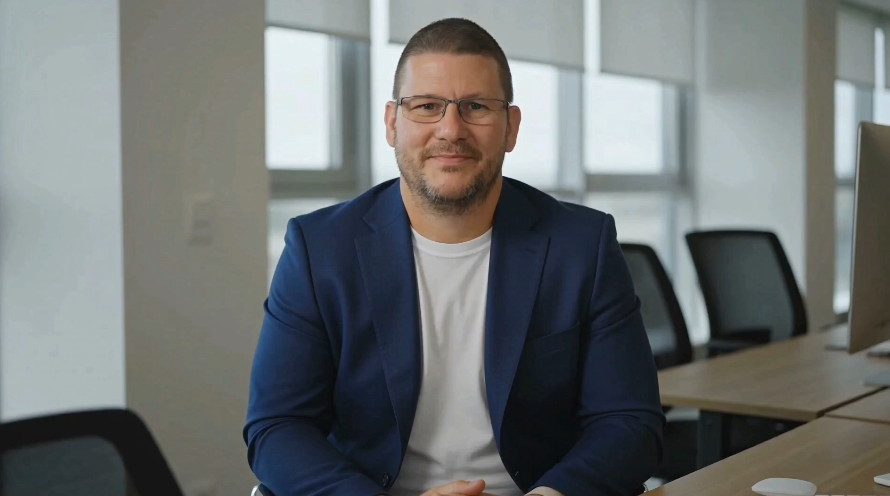
John Simpson, Co-owner
John Simpson is the Co-owner of Media Surge Marketing and creator of the SURGE Framework™, a proprietary methodology that helps local service businesses become the companies Google and AI recommend.
Specializing in AI visibility, local SEO, Answer Engine Optimization (AEO), and content strategy, John combines real-world client experience with ongoing research to help businesses build trust and improve their online visibility.
Ready to Implement
These Strategies?
Stop losing leads to competitors who are already optimizing for AI Search. Let's build your custom authority roadmap.